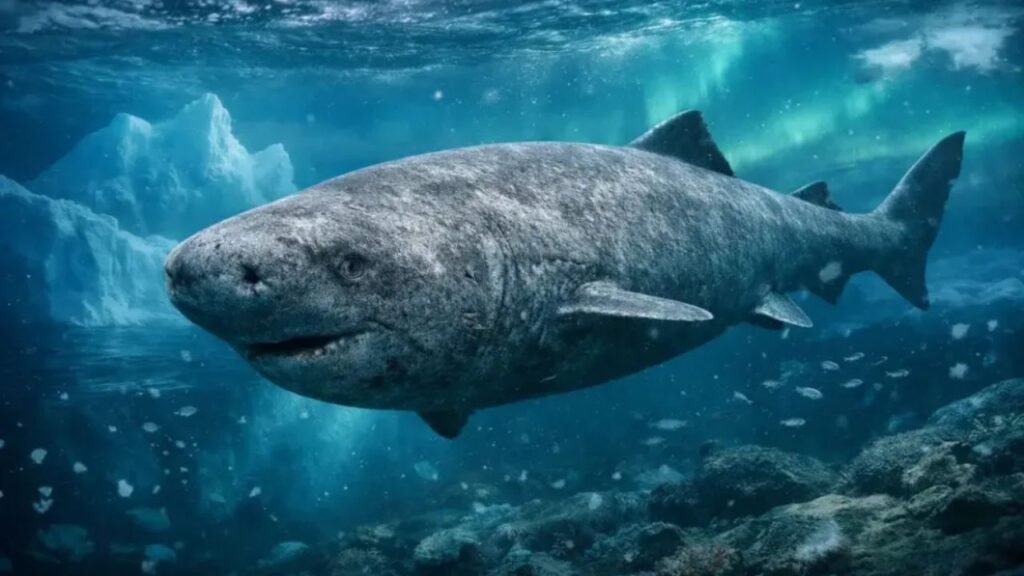
The Greenland shark is an amazing ocean animal. It lives in the cold, deep waters of the Arctic Ocean. Imagine a creature that was alive in the 1600s! This shark was born around the year 1627. This means it has lived for almost 400 years. It swam in the ocean long before many things we know today even existed. This makes the Greenland shark one of the oldest animals on Earth.
A Very Old Life
This particular Greenland shark started its life a very long time ago in 1627. The world was a different place back then. Empires were growing, and many parts of the world were unknown. People lived much slower lives, and there was no internet or global travel. While all these changes happened on land, this shark was just starting its long life in the cold ocean.
The world where this shark lives is unlike ours. It’s deep and cold, and time seems to pass slowly. Our human world is full of fast changes, new inventions, and big events. But deep in the ocean, the shark just keeps swimming, not bothered by anything happening above.
Growing Up Slowly
Greenland sharks grow very, very slowly. They only grow about one centimeter each year. Think about how fast most animals grow! Other sharks can grow many feet in just a few years. But for a Greenland shark, it takes decades to see a clear change in its size. This slow growth helps them live a very long time. They don’t need a lot of energy to grow fast, which is good in their cold home.
Scientists believe that a Greenland shark doesn’t even become an adult until it’s about 150 years old. That’s older than most humans ever live! This slow growing time isn’t a problem for them. It helps them survive in the very cold Arctic waters. They save energy because they don’t rush to grow quickly, and food can be hard to find in their environment.
A Big Discovery
In 2016, scientists found out just how old these sharks could be. They looked at the eye of a Greenland shark and used a special method to guess its age. They figured out one shark was about 392 years old! This discovery changed what we thought was possible for animals with backbones.
This amazing finding made scientists ask many questions. How can an animal live for centuries without getting old like other creatures? What special things about its body help it live so long in such a cold place? They started looking much closer at the Greenland shark to find answers.
Living in the Cold Arctic
The Arctic Ocean is a very tough place to live. The water is almost freezing, and it’s dark very deep down. Food can be scarce, meaning there isn’t much to eat. But the Greenland shark is perfectly built for this difficult home.
One important reason it survives is its slow body functions, called a slow metabolism. This means the shark doesn’t need much food to stay alive. It can live on little food for a long time. It moves slowly to save energy instead of hunting fast prey. Some scientists even think these sharks mostly eat dead animals they find, rather than chasing live ones.
Watching History Pass By
The Greenland shark has been alive for many important moments in human history. It was swimming before cars, electricity, and modern medicine were even invented. It was around when big things happened, like important papers being signed or humans landing on the moon. But through all of this, the shark stayed in its cold, quiet home, not knowing about our fast human world.
This makes the Greenland shark like a silent watcher of history. It lives through centuries of human changes, quiet in its cold ocean home. It doesn’t know about human fights, government changes, or new technologies. But it has felt them all by just being alive in the same ocean for so long.
Changes in the Arctic
For a long time, the Arctic Ocean was a very steady home for the Greenland shark and other animals. But now, the climate is changing. The Earth is getting warmer, ice is melting, and the ocean is changing. These changes can be very bad for the animals that live in the Arctic, including the Greenland shark.
Even small changes in temperature or how much food is available can badly affect animals that are used to stable, cold places. For the Greenland shark, which grows and has babies very slowly, it might be hard to change quickly. As the Arctic changes, these ancient sharks might be in danger.
Why Scientists Study This Shark
The Greenland shark is now a very important animal for scientists to study. Researchers want to learn its secrets of long life. How does it avoid getting old like other animals? Is it its slow body, its home, or something else that helps it live so long?
People also care about keeping the Greenland shark and other Arctic animals safe. As the environment changes, these animals might not survive. By studying the Greenland shark, scientists hope to learn how to help animals live longer and healthier lives, maybe even humans.
The Shark’s Strength
The Greenland shark shows us what it means to endure. It has lived for hundreds of years in one of the toughest places on Earth. Its strength isn’t being fast, but being able to move slowly, save energy, and live life at a calm, steady pace.
But this shark’s story also reminds us of something important. Even strong animals can be hurt by changes in their home. If the environment changes too quickly, it becomes hard to survive, no matter how tough an animal is.
A Creature From Another Time
The Greenland shark makes us think about time in a new way. Our world is fast and busy, but the shark lives a slow and patient life. For the shark, time is not about getting things done or making progress. It’s about quiet survival, steady, and not affected by the rush of human life.
In the end, the Greenland shark is a symbol of great strength. It has survived for centuries and will keep swimming in the deep Arctic. It shows us that life can happen at different speeds, and not everything is fast or easy to see. Some of the most amazing lives are lived quietly, deep below the surface, where time seems to stand still.